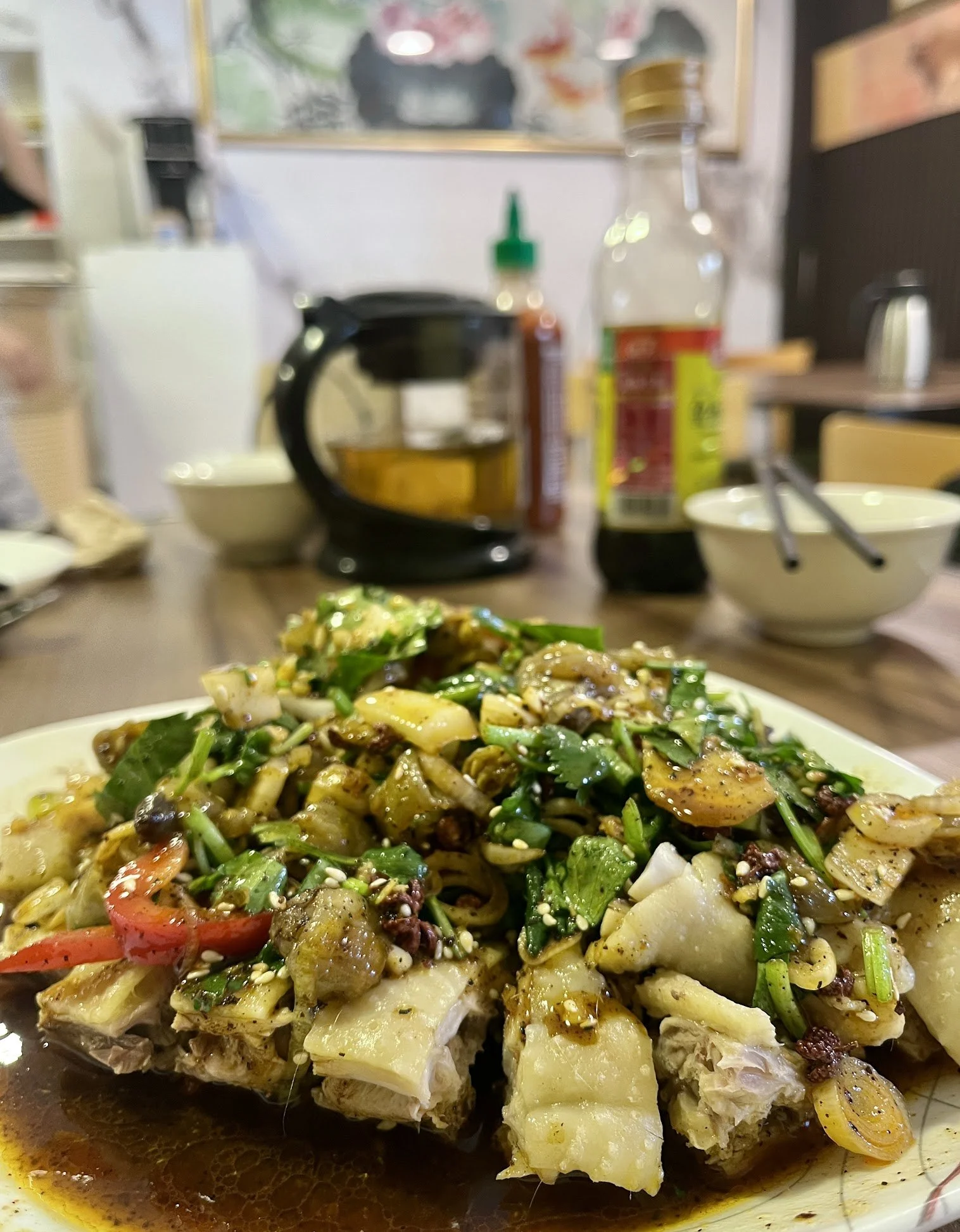
Chinese for Chinese: The Real Thing - part 4
ESPAÑOL
The “Asian invasion” of Mexico City—welcome, in my book—shows no sign of slowing. Across the capital, the soundtrack of sizzling woks—and the steady slurp of noodles—signals a quiet culinary subculture fueled in part by new immigration tied to the electronics and electric-car industries. In recent months, an astonishing number of Chinese restaurants, large and small, have opened—many clustered in and around Polanco and nearby colonias Anáhuac and Verónica Anzures, and in the Zona Rosa.
These places are not trying to sell anyone an idea of “authenticity,” nor are they polishing up Chinese food to suit the expectations of diners hunting for familiar sweet-and-sour comfort dishes. Quite the opposite. Many of them operate almost entirely for a Chinese clientele; some don’t even bother with Spanish-language menus (thank you, Google Translate). What they offer instead is something more interesting: food that simply assumes you already know what it is.
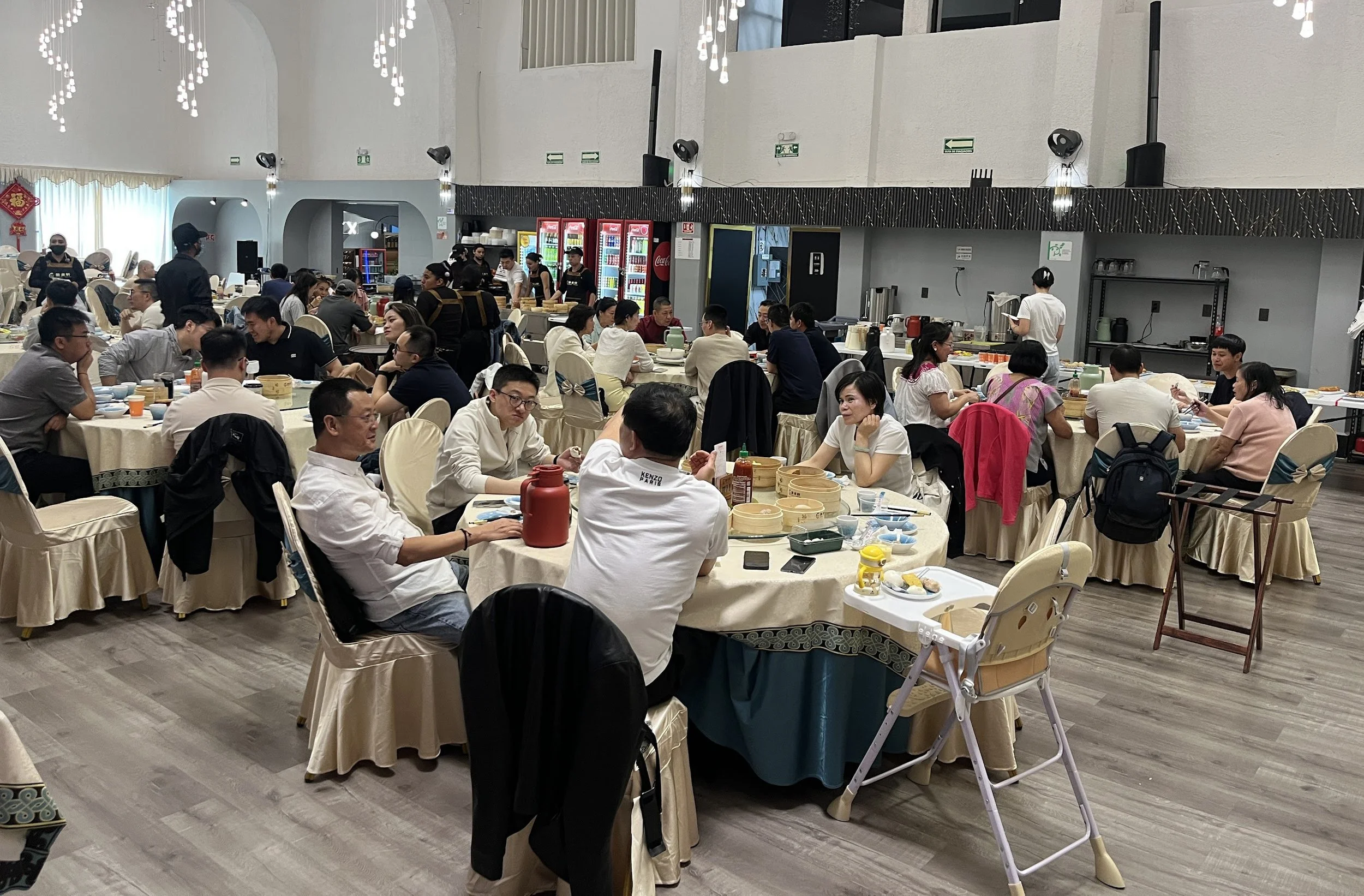
Dim Sum Saturday at Julongxuan
I recently visited an odd place in Colonia Juárez, up a flight of stairs, consisting entirely of large round tables for ten, each with a lazy Susan. The menu presented to me by the Spanish- (forget English!) language-challenged proprietors, who struggled to accommodate me, was on one of their phones—in Chinese. I had to photograph the menu and run it through Google Translate (and this was only one page), then order by trying to match the translation to the original, no easy task. I was then served the wrong dish.
Since the proprietors of these places assume that no non-Asian customers could possibly be interested in their fare, all this means is that the rest of us Chinese-food fanatics get the pleasure of discovering what’s good all by ourselves.
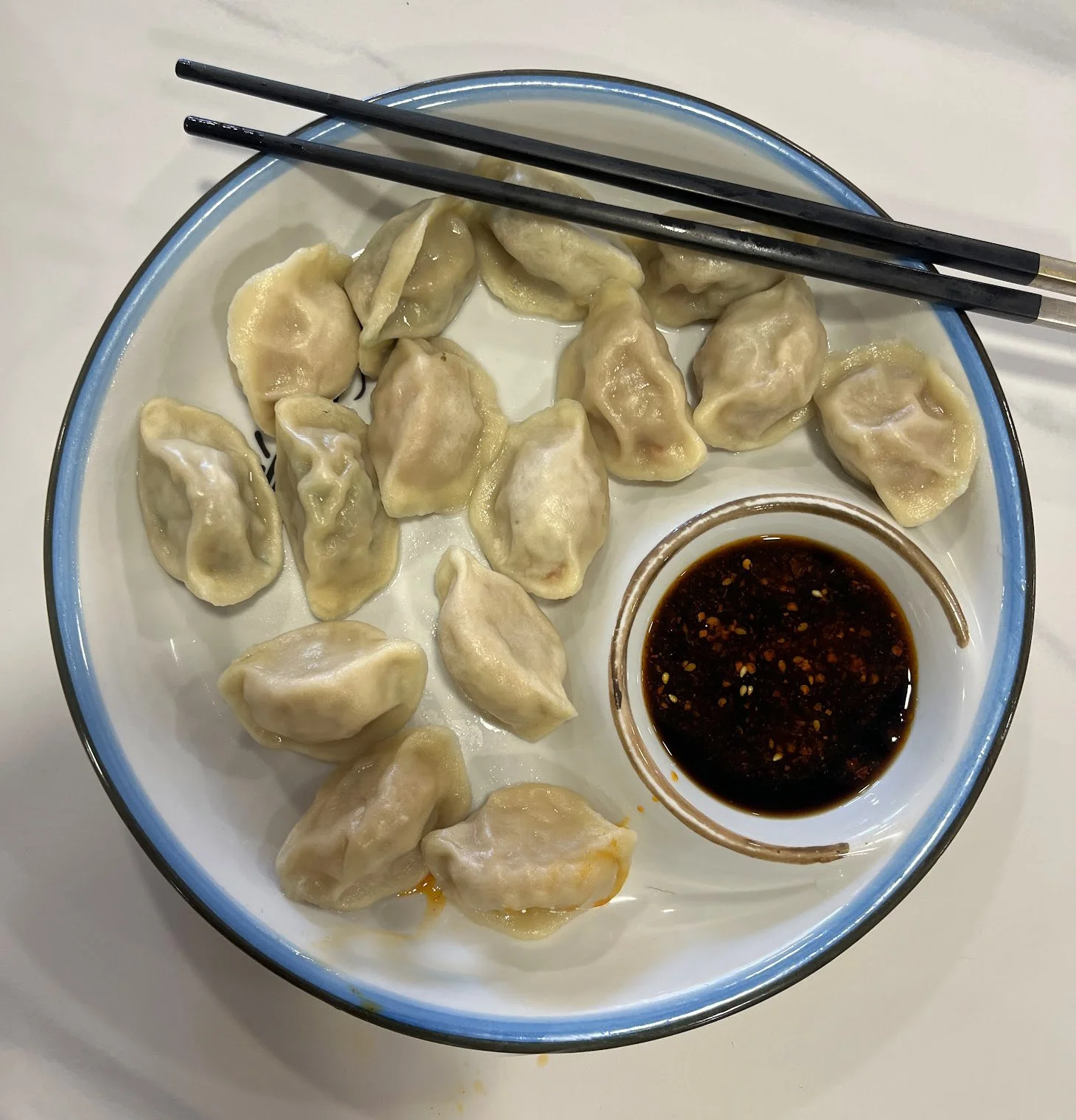
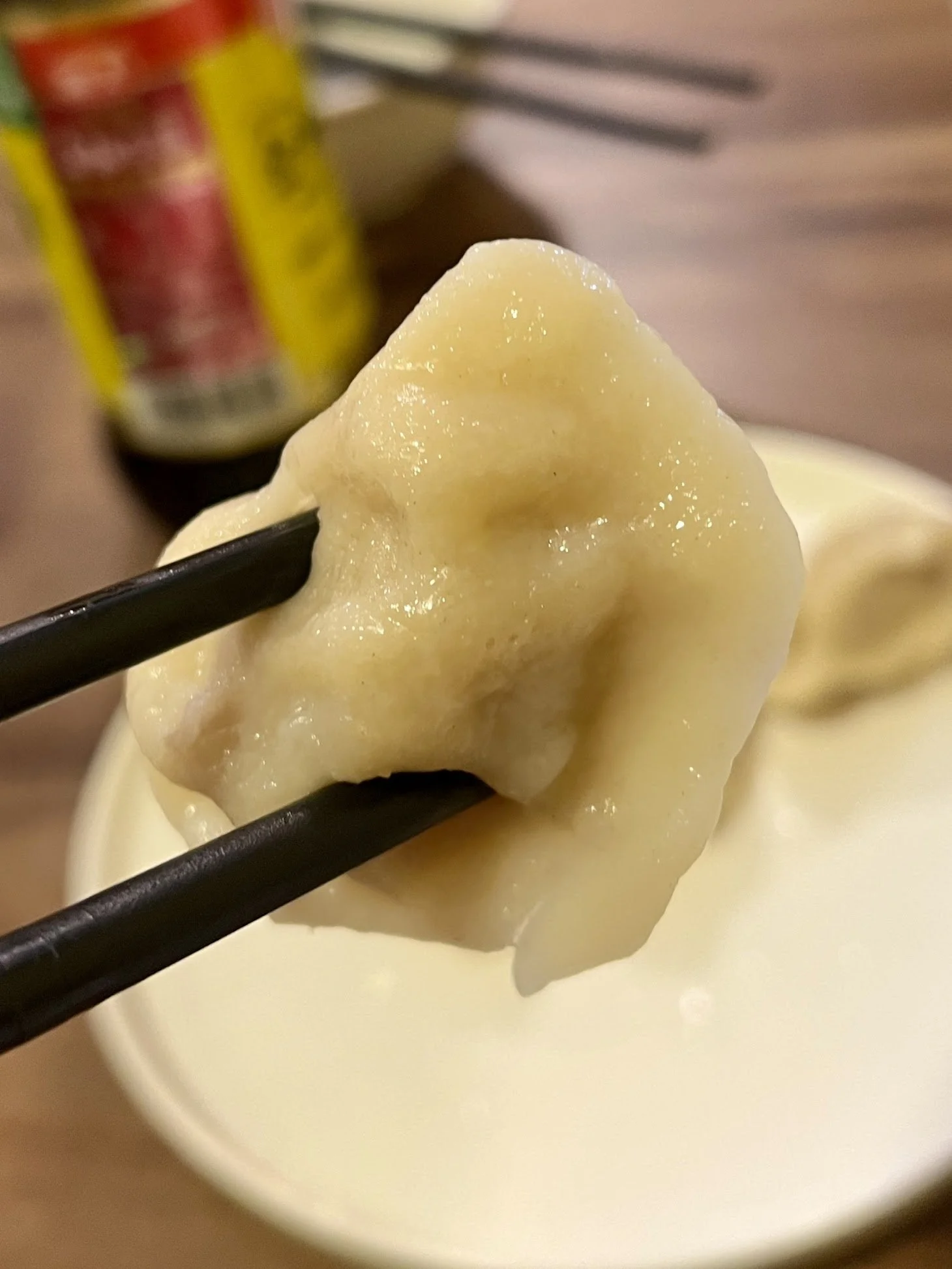
The dumplings at Zaodian Jian Mian
A recent discovery, Zaodian Jian Mian (早点见面), whose name translates loosely as “let’s meet for early morning noodles,” is located on a stretch of a nondescript street whose best-known occupant is the wonderful Pinche Gringo BBQ, across the way. There are several new Chinese places here, including a hot pot house, a bubble tea joint, and a mysterious place that claims to be a restaurant and “entertainment center” but wasn’t open when I last walked by. The cheaply printed and hard-to-make-out menu is that of a typical Chinese breakfast-and-noodle shop. There are snacks, including xiaolongbao—though these are not the Shanghai soup dumplings I had hoped for but rather fluffy steamed buns closer to baozi, the kind commonly eaten in the morning. Alongside them are other staples of the Chinese breakfast repertoire: soy milk (doujiang), fried dough sticks like savory churros (youtiao), congee, and various simple buns and sweets. This is the classic lineup you would find at a northern Chinese breakfast stall. The menu moves into heartier territory with a range of noodle dishes—soups, stir-fried noodles, and other wheat-based specialties—and there are rice plates topped with stir-fries.
早点见面 (Zaodian Jian Mian)
Laguna de Mayrán 278, Anáhuac (see map)
Open daily 8 a.m. – 8 p.m.
cost: $120 to 200 pp
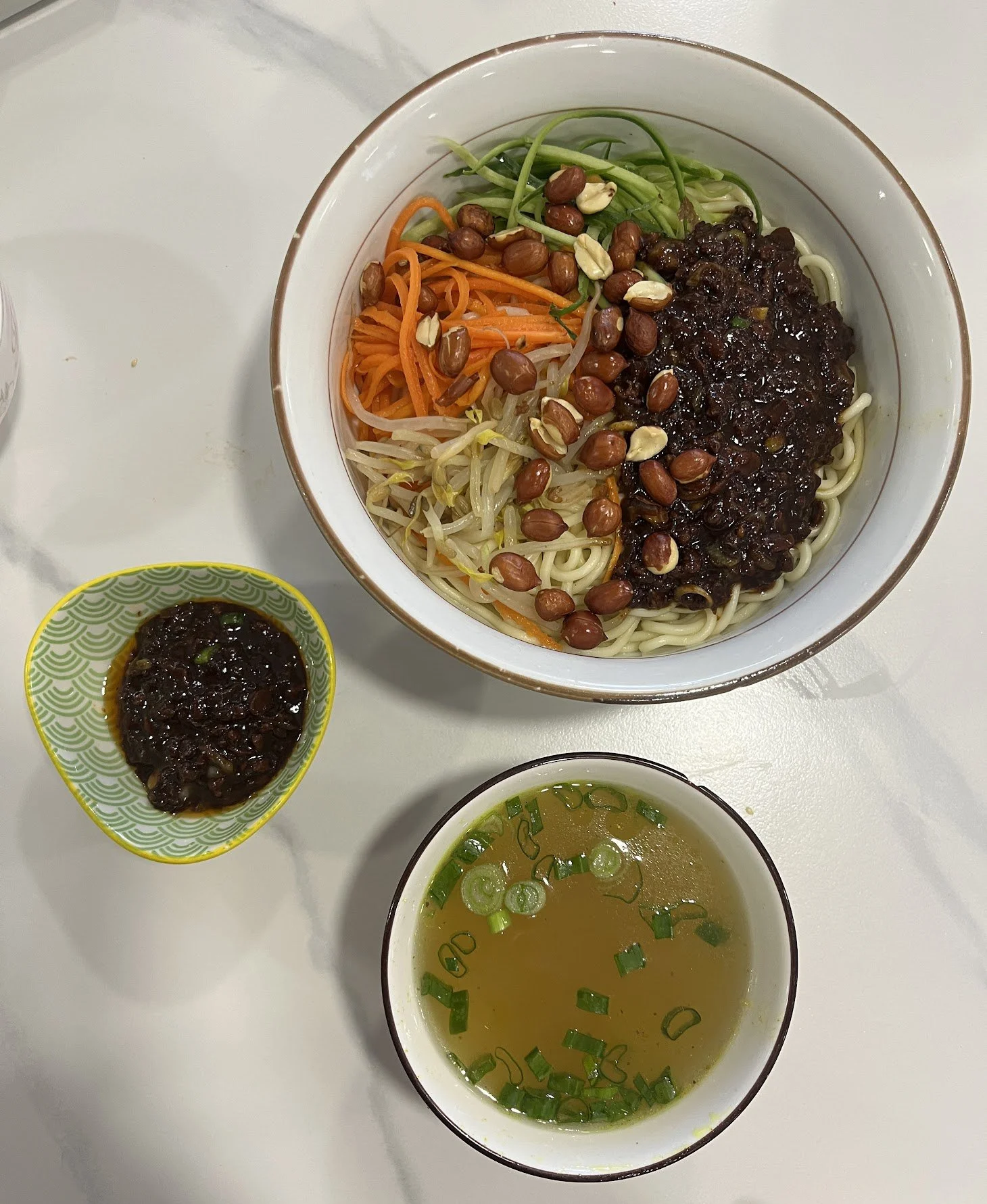
Ramen that’s not ramen at Lanzhou Ramen
The eminently likable Lanzhou Ramen, on the eastern edge of La Roma, is a name that neatly illustrates one of the small confusions surrounding Chinese food in Mexico. “Ramen,” of course, is Japanese; what’s served here has little to do with tonkotsu broths or miso-based soups. But the word has become a kind of marketing label applied to almost any bowl of noodles, Chinese or otherwise.
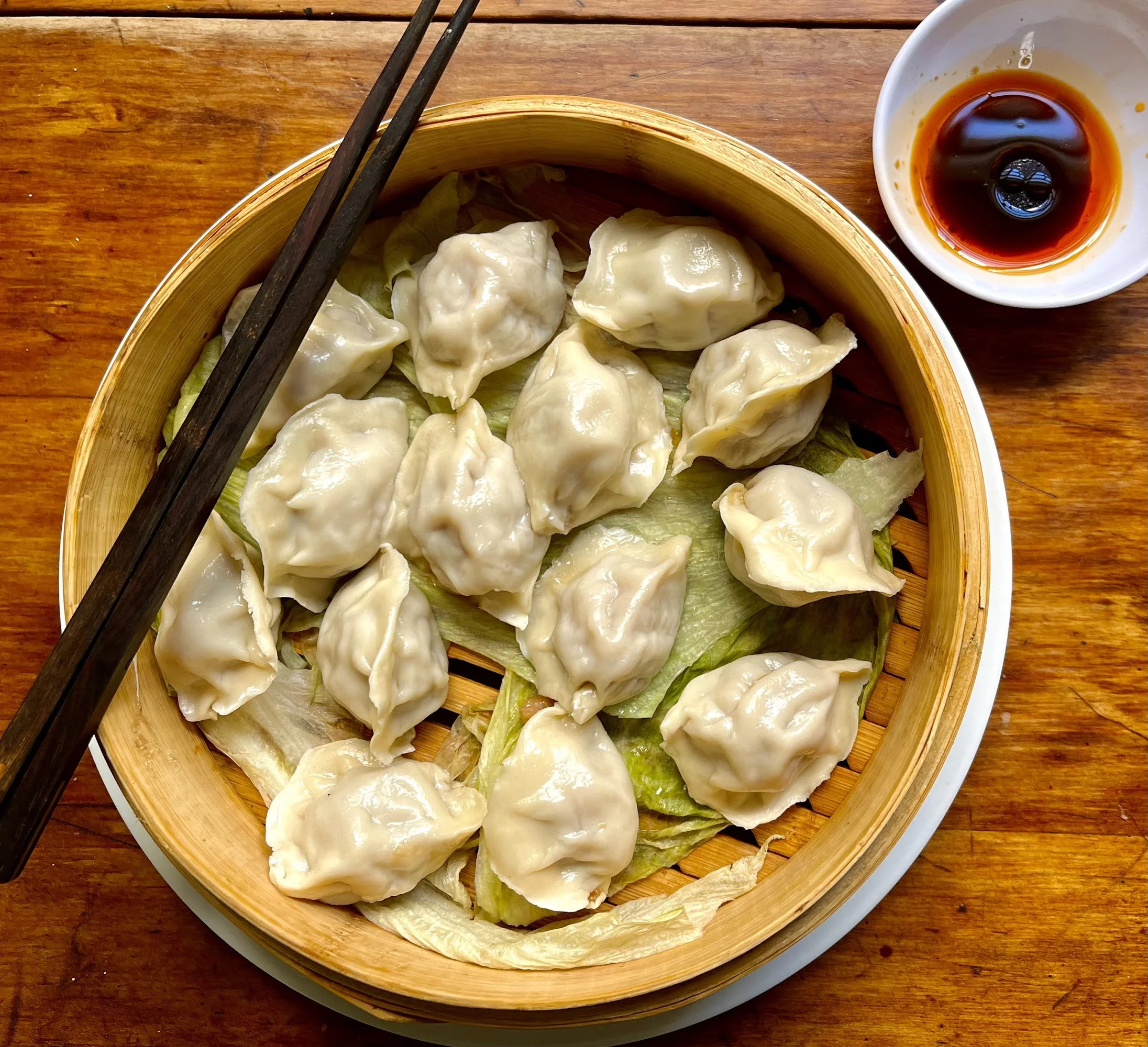
Look past the name, however, and a different picture emerges. The menu points, at least nominally, toward the northwestern Chinese tradition of Lanzhou-style noodles—clear broths, sliced beef, hand-pulled wheat noodles. But it quickly veers into a more hybrid, catch-all repertoire: stir-fried noodles, cold noodles with peanuts, dumplings labeled interchangeably as gyoza (another misnomer, gyoza being a specific Japanese potsticker), and a supporting cast of fast-food-ish fried snacks (nuggets, breaded shrimp) clearly aimed at a broader, less specialized audience. Indeed, the customers here are more local laowai than Asian.
In other words, this is not a narrowly focused Lanzhou noodle shop so much as a generalized northern-Chinese-ish menu, filtered through delivery-app logic and local expectations. The repeated use of “ramen” across the menu—ramen salteado, ramen frío, ramen estilo Xinjiang—only reinforces the point: the word is doing conceptual work, not culinary description.
Still, for those willing to read between the lines (and occasionally mistranslated labels), there are traces of something more specific here—an attempt, however diluted, to anchor the menu in the flavors and formats of China’s wheat-eating north. And they do it well. The dumplings are pleasingly chewy, the broths have depth, and the sauces kick ass. A small assortment of cold “salads” makes a good side dish.
Lanzhou Ramen
Frontera 39, Roma Nte. (see map)
Tuesday – Sunday, 12–5 p.m., 6–9 p.m. (closed Monday)
Average price p.p. $250
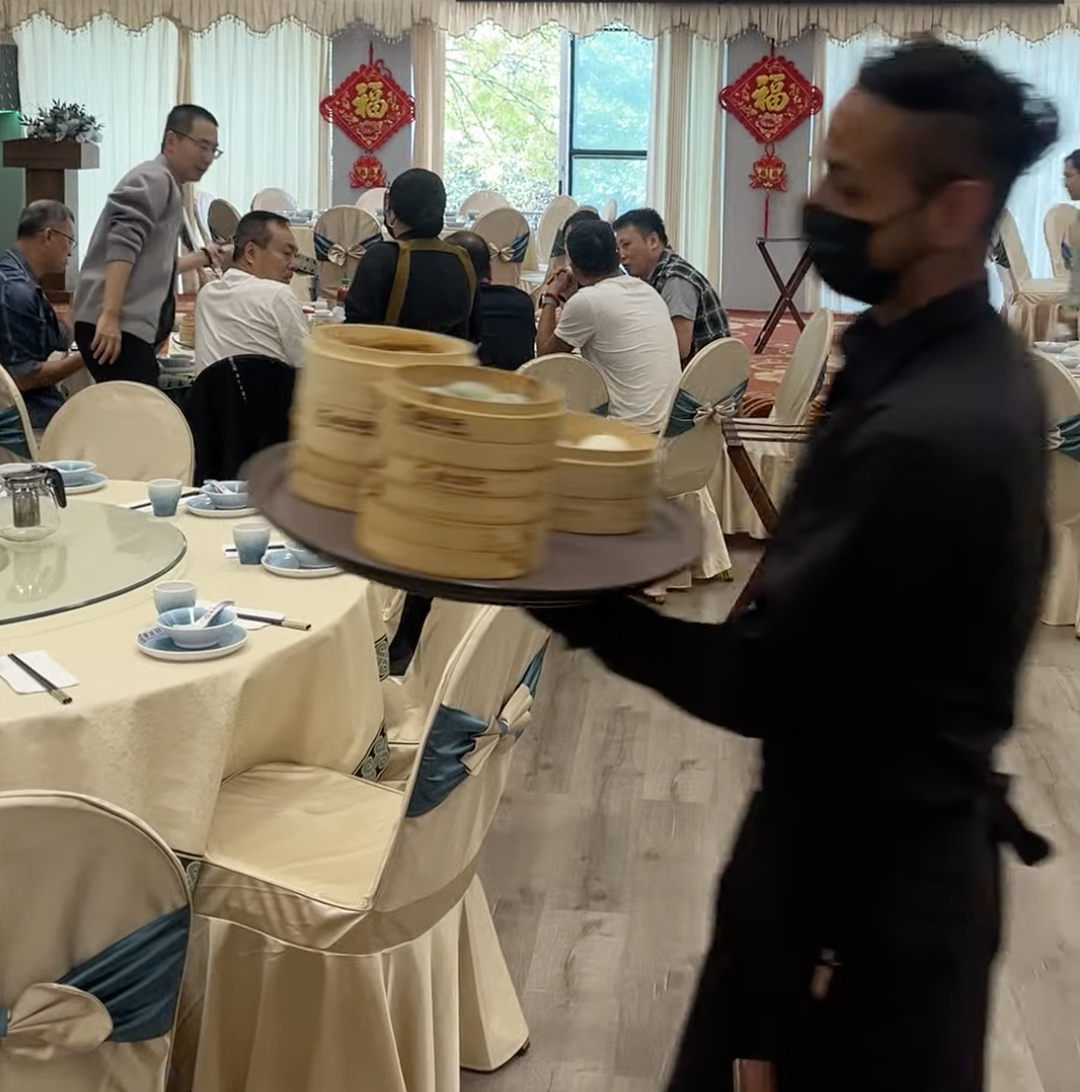
Dim sum at Julongxuan
If Lanzhou Ramen represents the loose, marketing-driven end of the spectrum, Julongxuan, in Verónica Anzures, sits firmly at the opposite extreme. It is a Cantonese banquet restaurant aimed at Chinese families, business groups, and community gatherings. On weekends, the huge space—reminding me of New York’s pandemic-closed and sorely missed Jing Fong—fills with Chinese families there for dim sum: steamed and fried dumplings, buns, chicken feet, soups of offal—myriad small plates circulating through a large, brightly lit dining room that feels more like a banquet hall than a neighborhood restaurant.
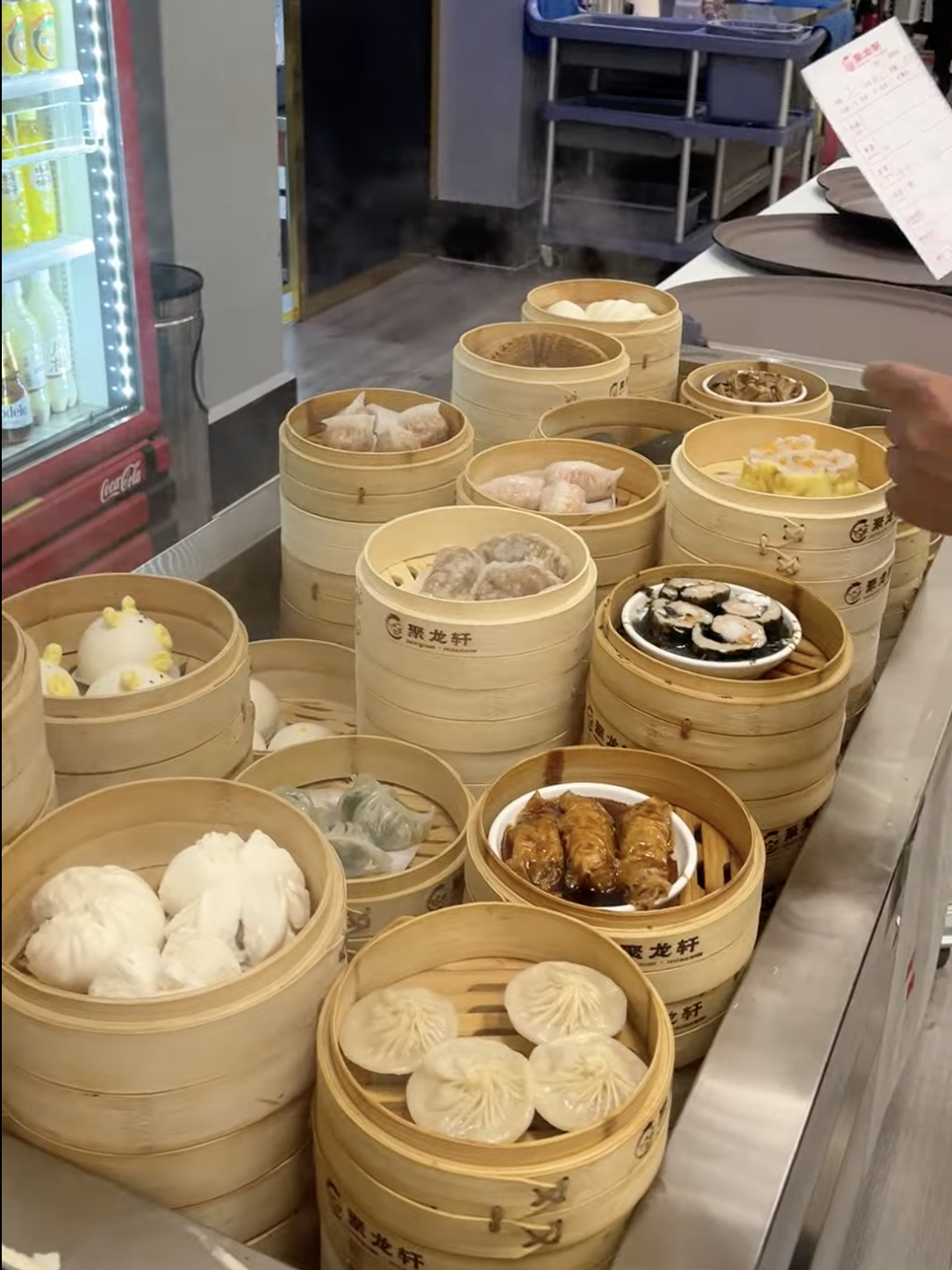
Dim sum at Julongxuan
The iconic shrimp-filled har gao are good, as are xiaolongbao, filled with a rich broth. The only thing missing is the carts, oddly, as there is plenty of room for them. The fare is ordered from a buffet set on a row of tables.
The regular menu, available outside of dim sum time (i.e., after 1 p.m. on weekends and during the week), is an expansive, unapologetically Cantonese repertoire of roast meats, live seafood, offal, and medicinal-leaning soups—the kind of cooking built for round tables with lazy Susans and groups of ten or more. There is little attempt to translate, adapt, or explain. This is not food designed for the laowai—though, as ever, the persistent ones are welcome to sit down and figure it out. I am fascinated by the expensive roast goose on offer but have yet to try it.
Julongxuan Restaurante Chino
Bahía de Todos los Santos 106, Verónica Anzures (see map)
Open Monday - Friday 12 - 10 p.m., Saturday and Sunday 10 a.m. - 11 p.m.
Average $500 pp
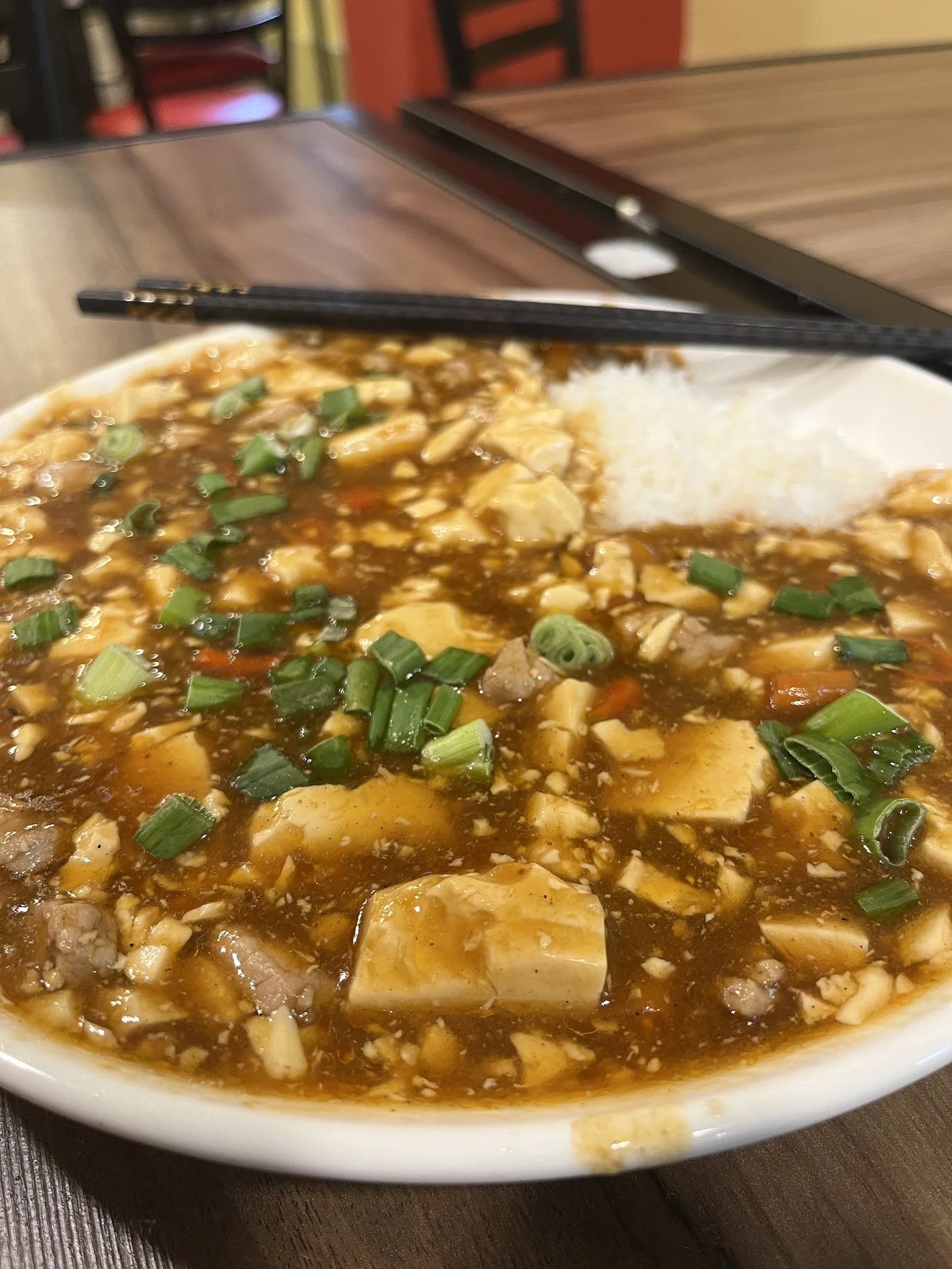
Ma Po Tofu - Sichuan comfort at Jing Teng
Jing Teng, on the southern edge of the Zona Rosa, is a friendly place featuring a sprawling and only partially translated menu that reads like a map of regional compromise: Cantonese roast meats and banquet dishes sit alongside a full roster of Sichuan crowd-pleasers, medicinal soups heavy with ginseng and goji, and clay-pot casseroles that veer into northern comfort food. This is not a restaurant trying to define a cuisine so much as one trying to accommodate a community.
The result can feel chaotic to the uninitiated laowai, but to those who know how to read it, the signals are clear: this is a place built not for explanation, but for recognition. Non-Asians will be handed a one-page menu featuring the dishes they are expected to choose—fried rice, sweet-and-sour pork, etc.—so be sure to ask for the longer menu meant for Chinese customers, where many of the more interesting dishes and categories reside. Dumplings are respectable, as is the ma po tofu and the berenjena en salsa de pescado, one of my favorites—the tender strips of eggplant arriving sizzling madly in a clay casserole. This kitchen may not achieve the depth that nearby Yi Pin Ju’s does, but it is a good alternative and a short walk from the Condesa.
Jing Teng
Amberes 81, Zona Rosa (Juárez see map )
Open Monday – Saturday 12–10 p.m.; Sunday 1–9 p.m.
Average $300 pp
See:
Chinese for Chinese Part 3
Chinese for Chinere Part 2
Chinese for Chinese Part 1