Le Chique’s Jonatán Gómez Luna in His Own Words
For years, Le Chique has stood alone. The restaurant, whose kitchen is manned by the extraordinary Euro-trained chef Jonatán Gómez Luna, has drawn destination diners to a stretch of the Riviera Maya that, until relatively recently, could only be described as gastronomically spartan. Cancún and its surroundings have long catered to a tourist economy where food was secondary, often perfunctory—about quantity rather than quality—and rarely rooted in place. That perspective is changing. A new generation of chef-driven restaurants has begun to take hold across the peninsula, and the opening of Hotel Xcaret Arte marks a further shift: a high-design, high-end property where Mexican culture—visual, material, and increasingly, culinary—is put forward with unusual conviction. It is here that Le Chique, which holds a Michelin star, has been reborn.
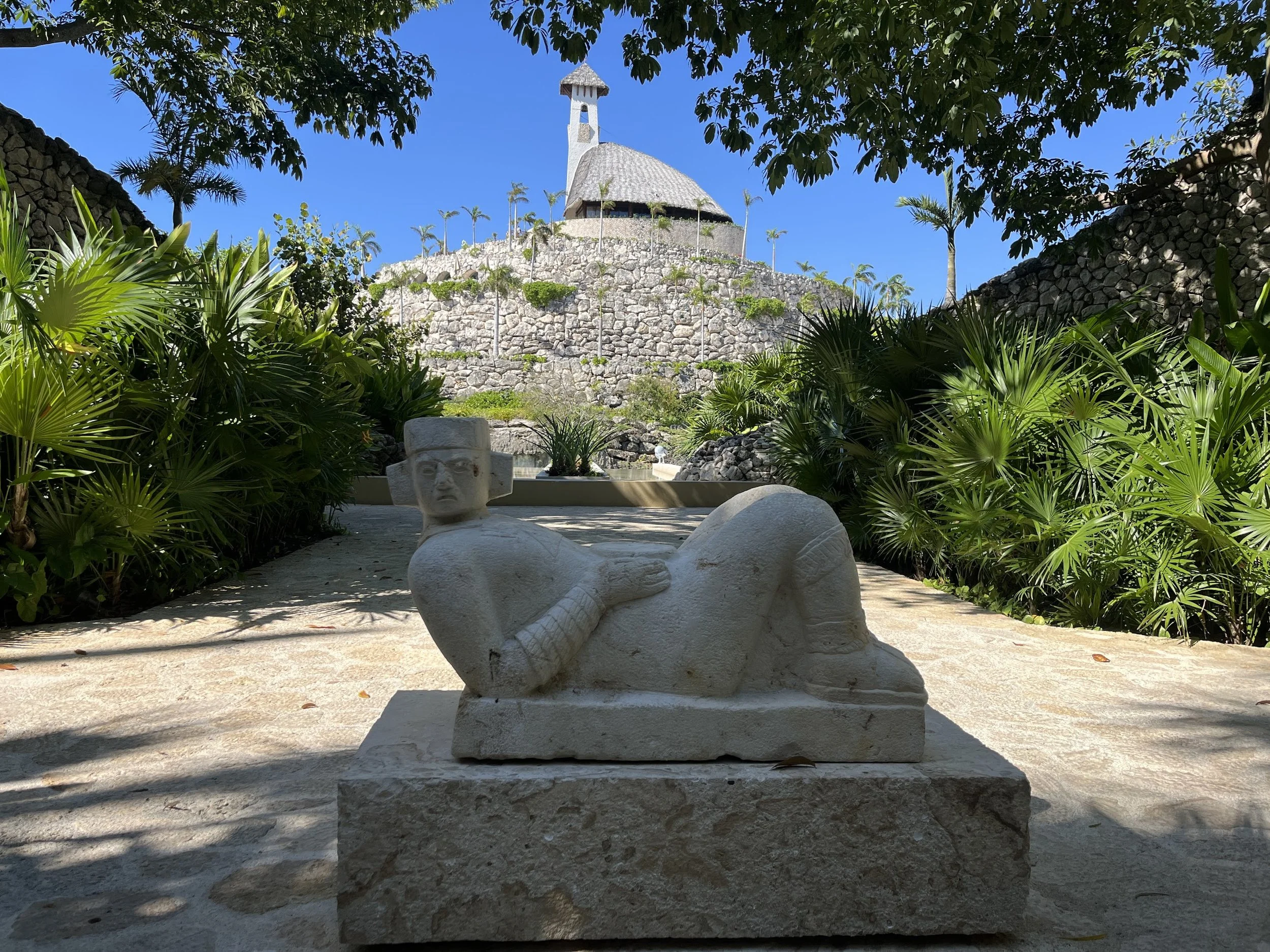
The Hotel Xcaret Arte
The new setting, as a whole, is more polished and more aligned with the restaurant’s long-standing aspirations. The menu, at twenty-seven courses, is equally ambitious—perhaps stubbornly so, at a moment when many chefs are moving in the opposite direction. For years, the long tasting menu has been the dominant format of high-end dining: a chef’s argument, laid out in 20, 30, sometimes more courses. Recently, that type of experiential theatrics has begun to feel fatigued. In some revered temples of gastronomy, there has been a quiet retreat toward brevity—fewer dishes, more focus, less text, less choreography.
And yet, here we are again: twenty-seven courses. There are moments when the experience edges toward excess—when the sheer number of ideas threatens to overwhelm rather than persuade. But that tension has always been part of Le Chique’s identity. This is a form of dining that has long flirted with theater. From Ferran Adrià’s legacy to Heston Blumenthal’s notion of “multi-sensory gastronomy” at The Fat Duck, and onward to René Redzepi’s increasingly narrative-driven Noma, the meal becomes staged, sequenced, cinematic. Le Chique belongs, uneasily but undeniably, to this lineage.
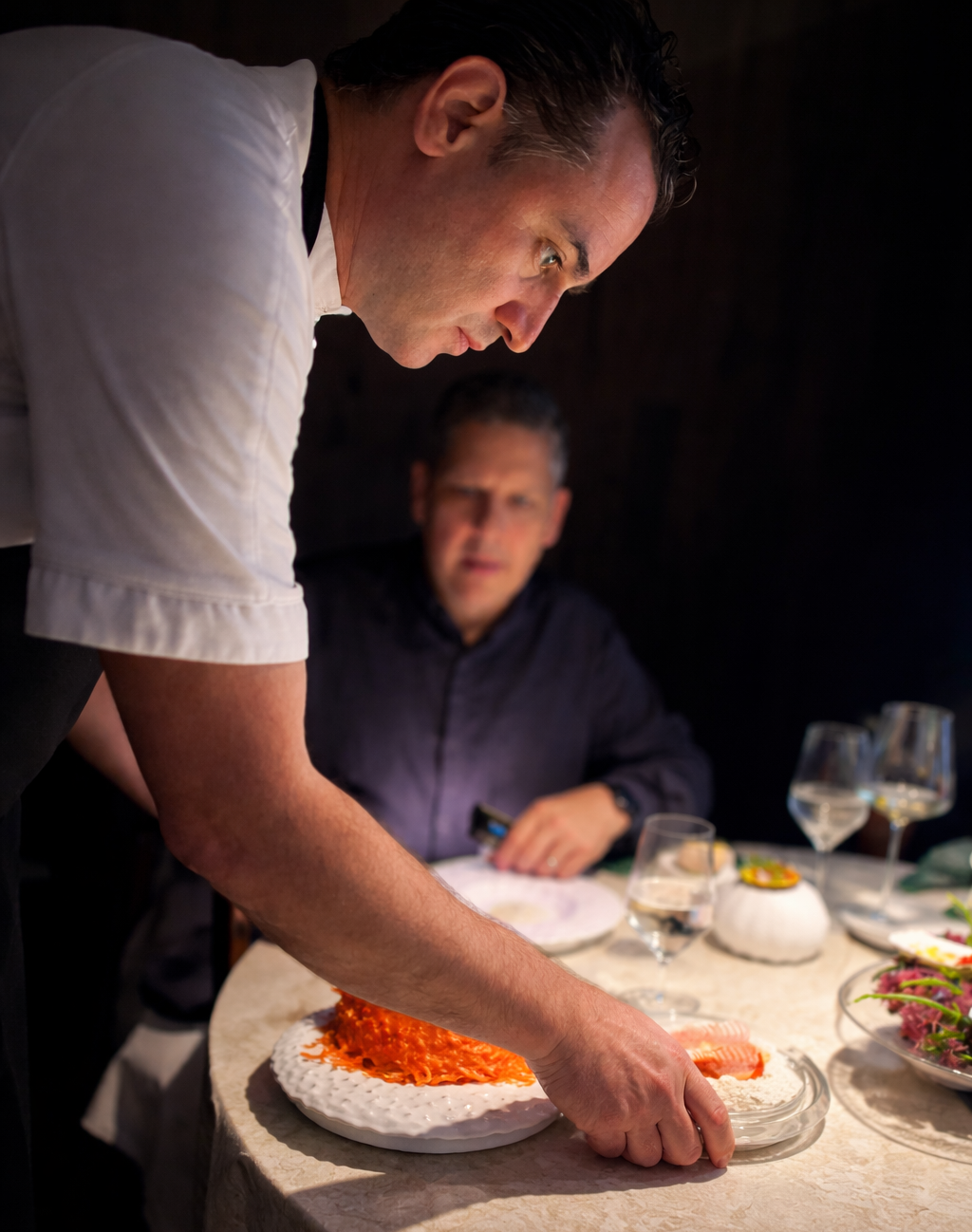
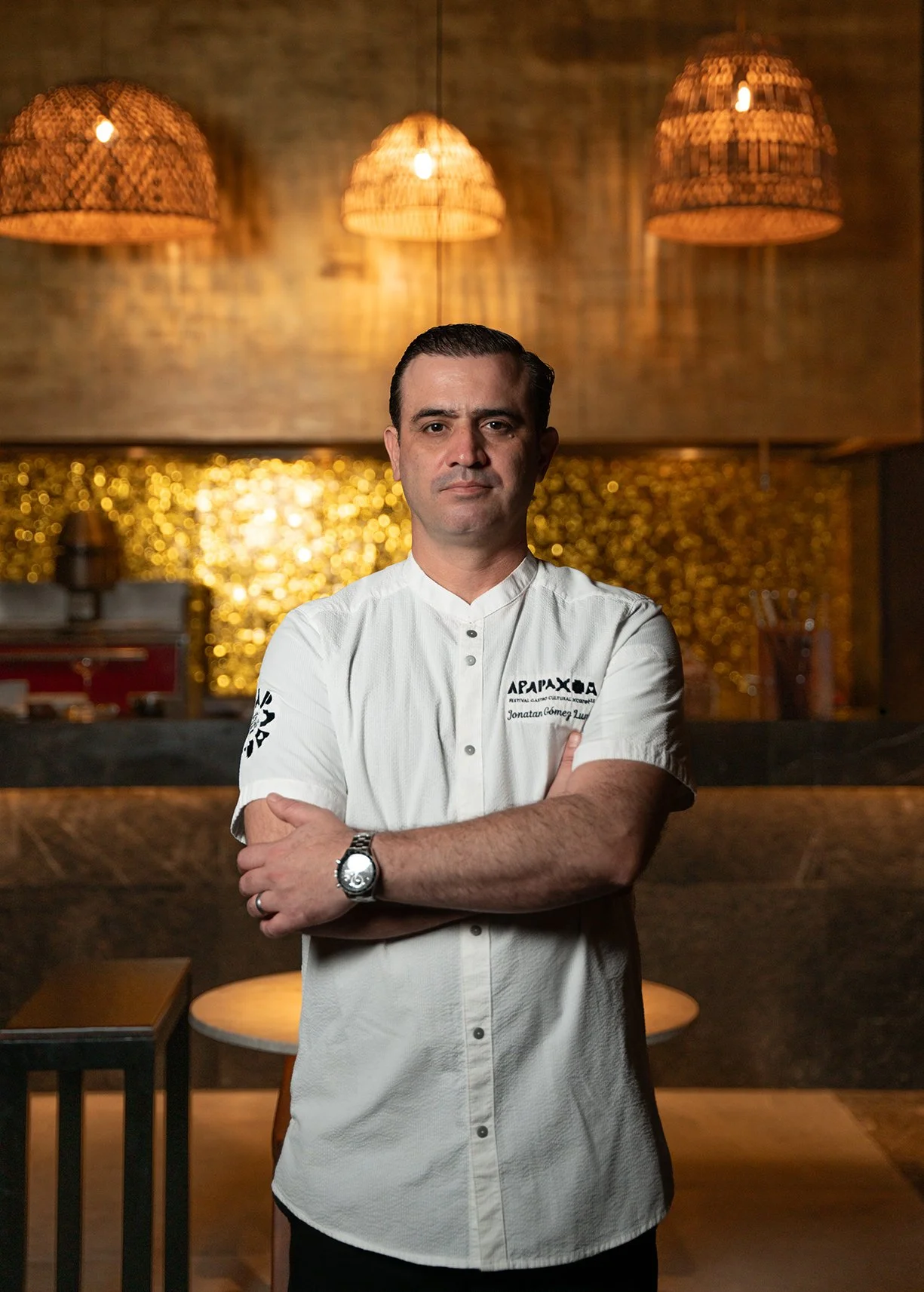
The chef at work
At a recent visit, I began the “culinary experience guided by narrative” (as Le Chique’s publicity would have it) by being led, rather mysteriously, from space to space, seated in various locations, and even separated from my dining companions. I was reminded of the disembodied hands of Cocteau’s La Belle et la Bête, which guide the hapless visitor to her palatial destination. The choreography is still settling into this new space, but the intention is clear: this is not dinner, it is progression.
And then the length asserts itself. Courses arrive in steady succession, sometimes one at a time, then in clumps, spaced just enough to keep one alert, but never quite enough to suggest an end. I begin to think of Buñuel—no, not the biblical Last Supper of Viridiana, but the existential entrapment of The Exterminating Angel. Would we ever finish? Would we be allowed to leave, or were we caught in a closed loop of culinary recursion?
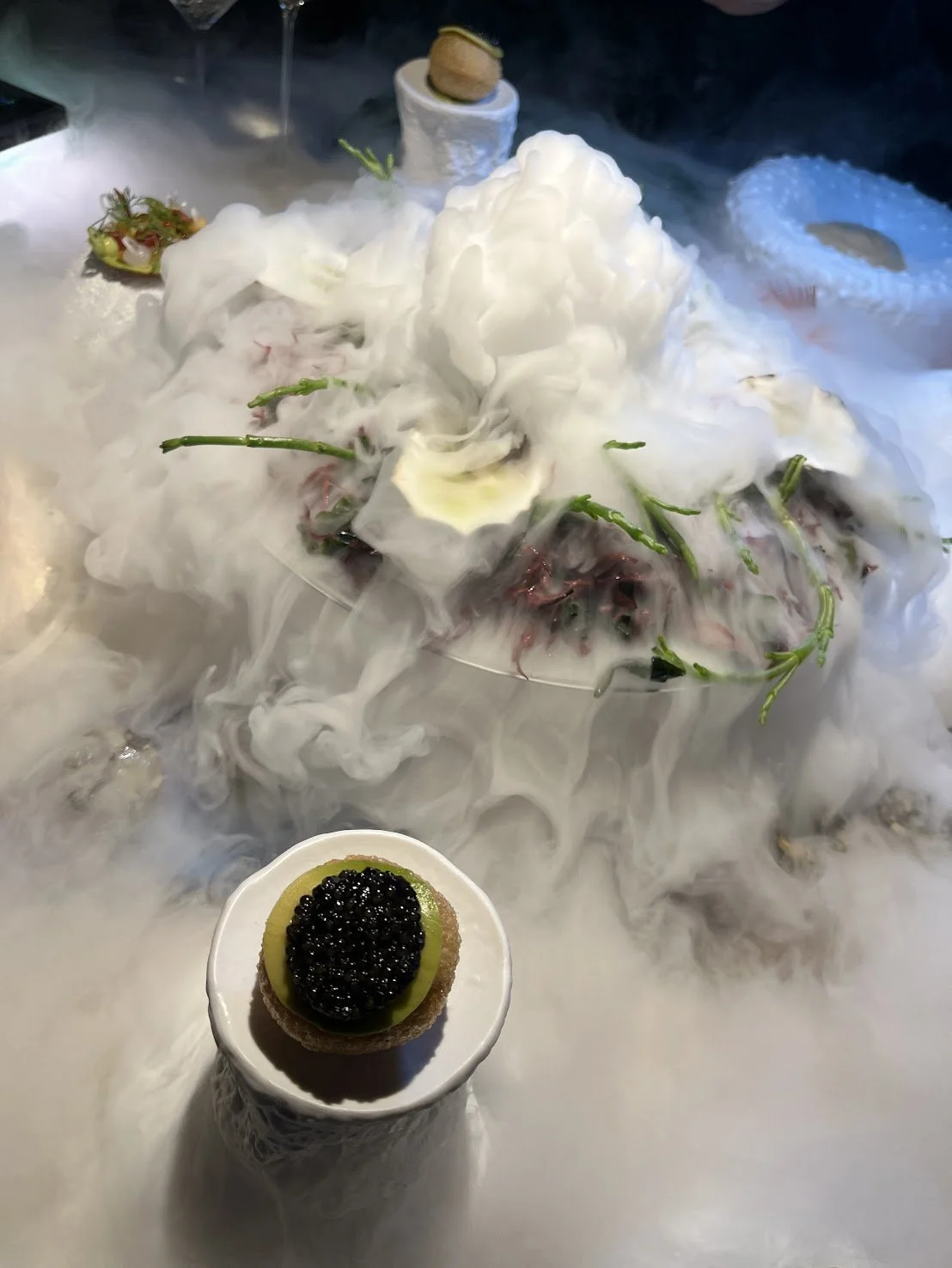
The operatic oyster
The meal is, at times, operatic. Some dishes evoke a kind of steamy Wuthering Heights atmosphere—at the center of the table, dry ice fog lifts to reveal several oysters, resting on a bed of multicolored seaweed, dotted with “agua de ceviche,” Yucatecan kimchi–infused oil, and cured roe. Then there is the tiny gallina fashioned from crisp chicken skin, resting on her nest and eyeing the diners, almost goddess-like. She accompanies her egg: an apparently soft-boiled and peeled quail egg, minimally decorated with a dusting of verdant herbs, perched in its nest of hay. We learn that the yolk has been extracted and emulsified with kilpauk, a typical chutney of roasted tomatoes and habanero, then injected back into the egg white. When the remade egg is gently prodded, the golden, translucent sauce seductively oozes out. Taken together as a small bite, almost sipped, the texture and flavor are delicate and layered. The chef insists that “there’s that dilemma of trying not to force creativity; it has to flow.” It does.
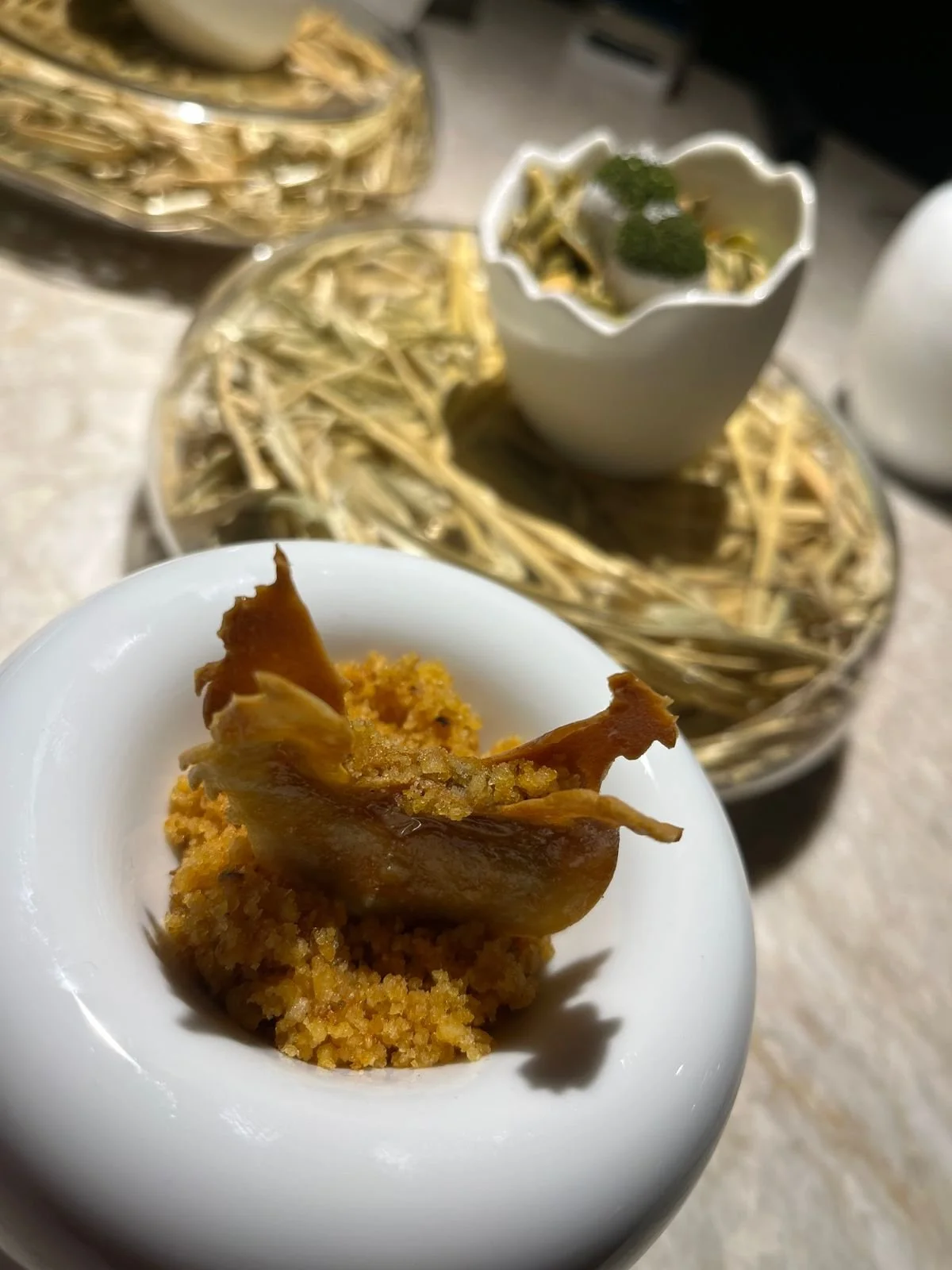
The hen and her egg
It can veer toward the surreal: golden spheres crack open to reveal escamoles—ant eggs: The Gilded Age meets The Treasure of the Sierra Madre. Little tarts of venison wear crowns of impossibly tiny flowers. A walnut reposing on moss is really cacao and black truffle. Will a broth be served in a reproduction of Meret Oppenheim’s Fur Teacup?
We proceed from small to more substantial appetizers, then to a Wagnerian presentation of oceanic offerings. By the time we arrive at a familiar but finely tuned Oaxacan mole negro, melodramatically poured over an embarrassed naked chunk of tongue, à table (can we dispense with this performative ritual, already?), and eight or nine wines later, I and the other guests are fighting food fatigue.
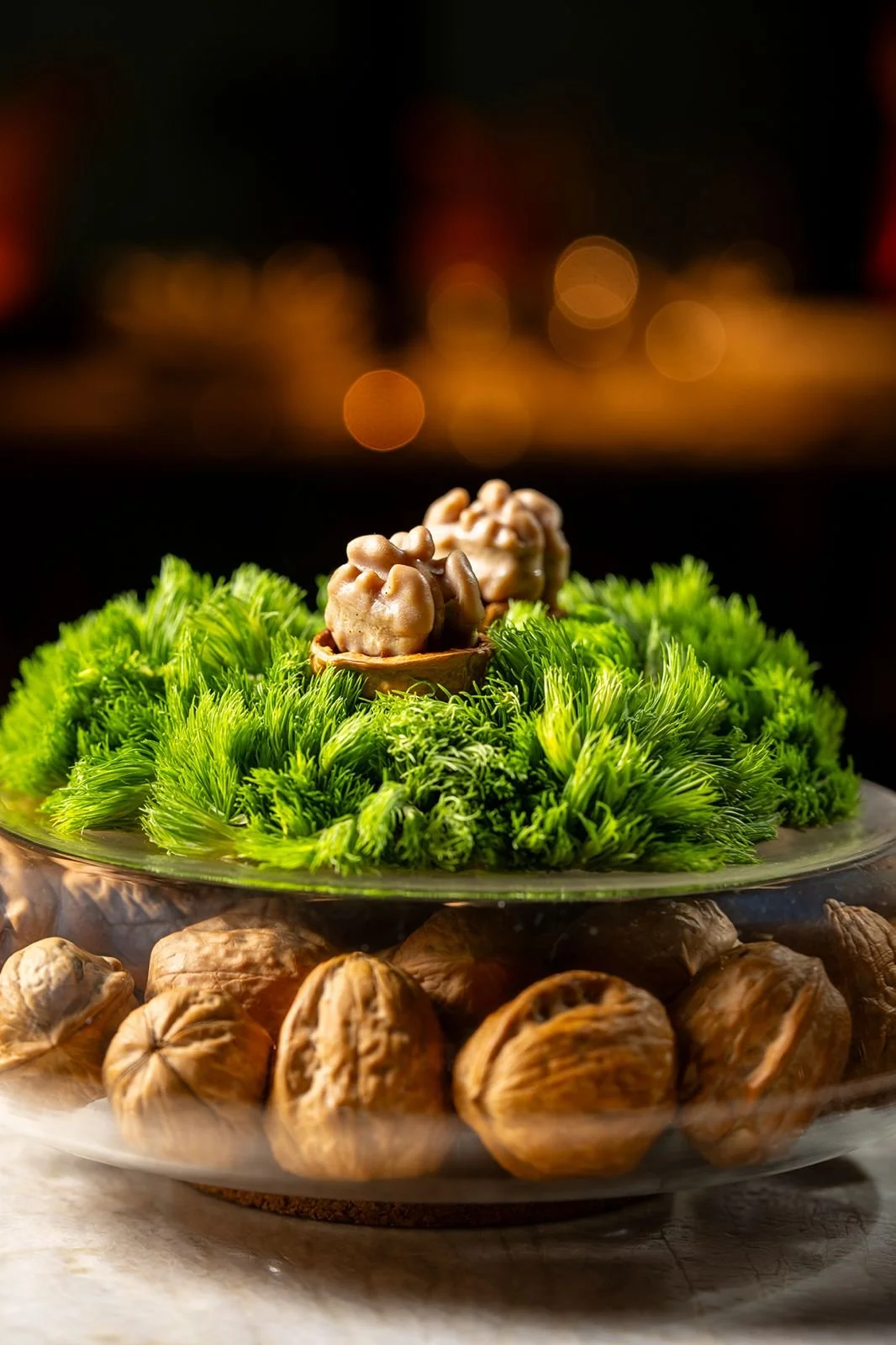
The nut that is not.
While I’m not convinced that an endless procession of dishes is the future I’m looking for, one has to respect the chef—part cook, part conjurer—whose succession of small illusions continues, against the odds, to enchant.
Four or five hours later, the curtain finally falls and we are released from this Sartrean spell. There is no dramatic grand finale, no catharsis—just a gentle return to the outside world. For a moment, I half-expect the guests to fly off into the sky on broomsticks, à la De Sica’s Miracolo a Milano. Instead, they wander out slowly into the caressing tropical night, dazed—but unmistakably quenched.
The following day, I was sufficiently recovered to be able to chat with the chef, trying to make sense of the whole thing.
Nicholas Gilman: Let’s start broadly. How has your cooking evolved since the early days of Le Chique?
Jonatán Gómez Luna: We have evolved a lot. At the beginning I was very young, and the cooking was overly mechanical—more methodical than flavorful. I was obsessed with perfection, with putting many techniques on the plate, and taste came almost as an afterthought. That changed quickly. I realized that I don’t eat that way. I grew up enjoying delicious food. So why wasn’t I cooking any? Now it’s the opposite—an obsession with flavor, supported by technique.
NG: With distance, is there anything from those early years that you wouldn’t defend today?
JGL: Yes. I took everything to the extreme. Too many hours, too much obsession. I put the restaurant ahead of my family. I was focused on being the best, and that made me neglect important things. That’s something I would change.
NG: For a long time, surprise and effect were central to your language. Has that disappeared?
JGL: No, but it has transformed. Before there was too much “smoke,” too much performance. Now it’s more about the ingredient, about where things come from, about having a clearer discourse. It’s still our style, but more mature.
NG: The earlier menus were very explicitly about “Mexico” as a whole; 32 courses for the 32 states. That seems less pronounced now.
JGL: Yes. Before it was very direct—we showed the whole country. Now it’s more personal. We’ve already traveled Mexico. Now we focus more on where we live. The Yucatán has incredible richness, and now the menu reflects that more clearly.
NG: There’s a lot of discussion now about fatigue with long tasting menus. And yet here we are with 27 courses. Is that a conscious decision?
JGL: Yes. It may be less fashionable, but for me it’s still the best way to express what I do. I work in sequences—five or six dishes at a time. That’s how I tell a story. If I reduce it to six or ten, I lose that. This menu has 18 new dishes—one for each year of Le Chique—and nine classics. Together they make 27. It’s a new cycle.
NG: How difficult is it to edit a menu like this?
JGL: Very. For these 27 dishes, there were maybe 60 ideas. Many sound incredible in your head, and then you cook them and they’re terrible. So you test, adjust, combine ideas. The hardest part is maintaining a thread, keeping the diner engaged.
NG: There also seems to be a shift toward lighter dishes—more seafood, more vegetables.
JGL: Yes. Before there was too much fat—foie gras, offal, heavy dishes. Now we balance it more. You eat a lot, but you feel good at the end. That’s important.
NG: And the move to this new space?
JGL: It’s a challenge. We’re still adjusting the choreography. But I’m sure this will be the best version of Le Chique. Everything is there—we just need to bring it all together.
*Le Chique, located in the Hotel Xcaret Arte in Playa del Carmen, operates Monday through Sunday. The Tasting Menu is priced at $3,900 MXN per person, with the option of two pairing proposals: Maridaje México ($3,000 MXN), focused on a curated selection of national labels, or Maridaje Saasil ($5,000 MXN), which integrates a selection of the world’s finest wines.
*See my first review of Le Chique
*photos of the chef and the Nuez, courtesy Ignacio Urquiza